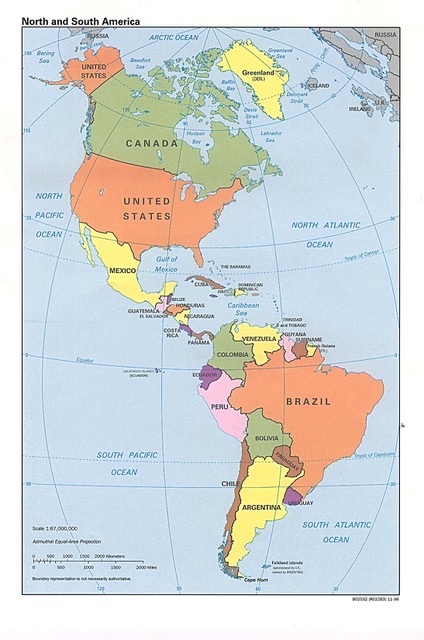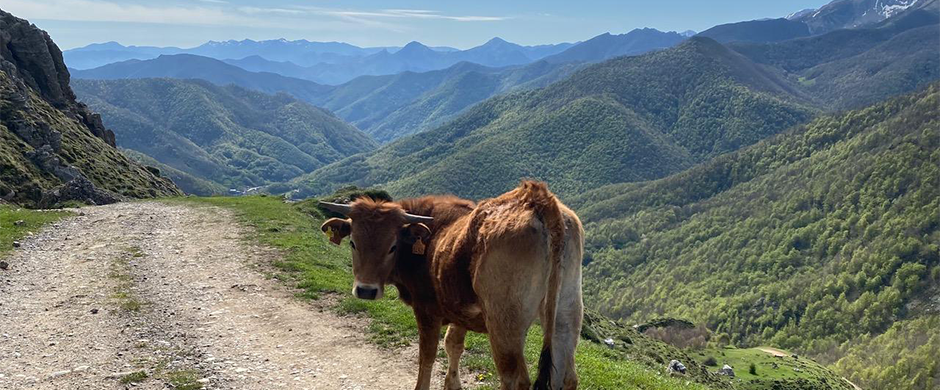
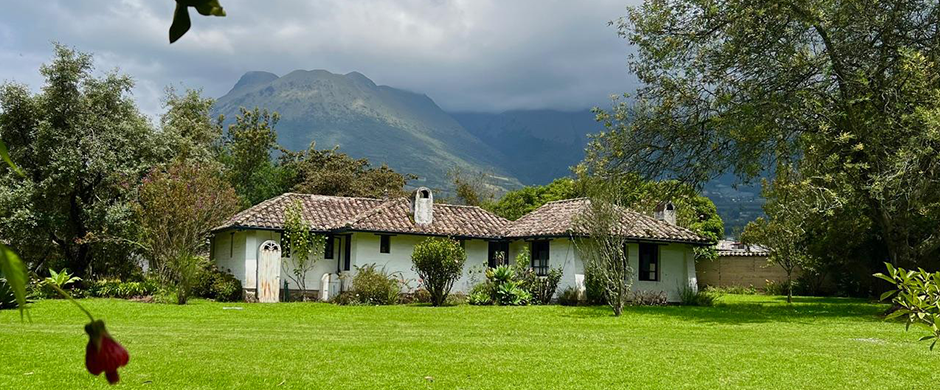
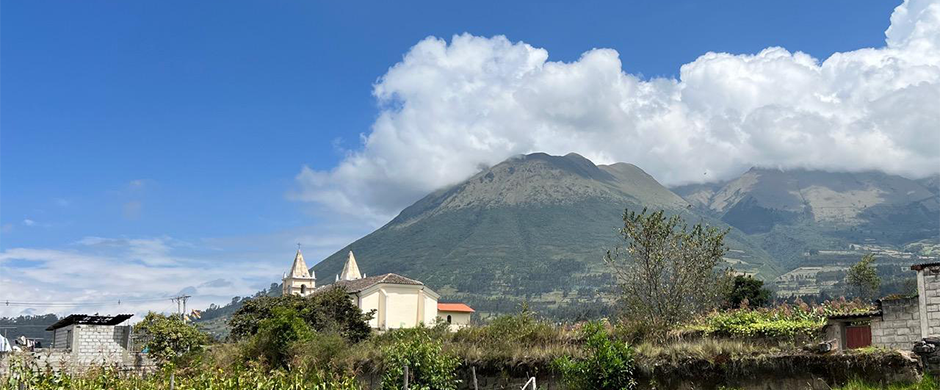
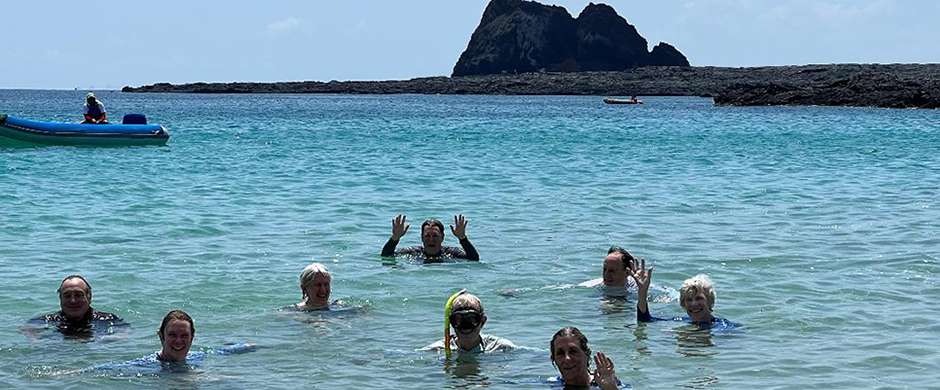
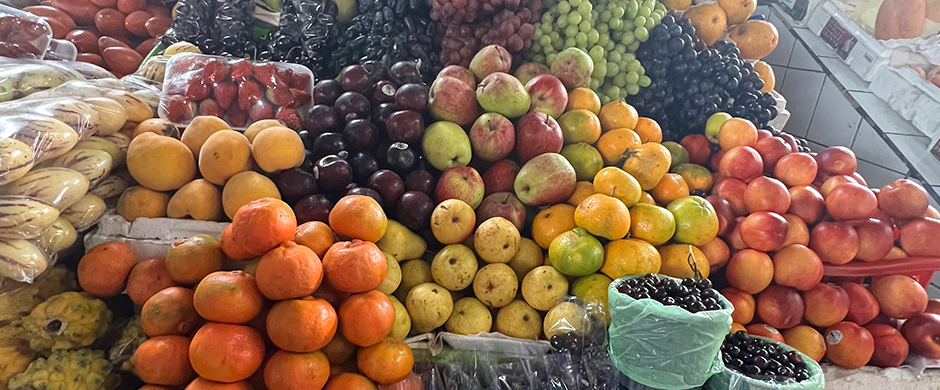
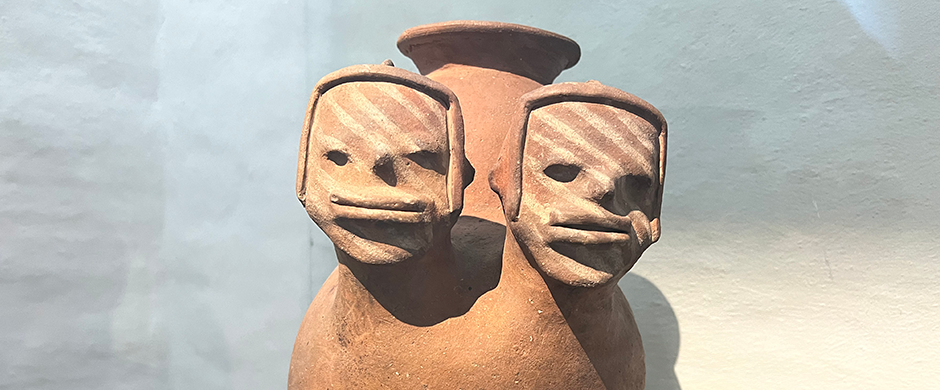
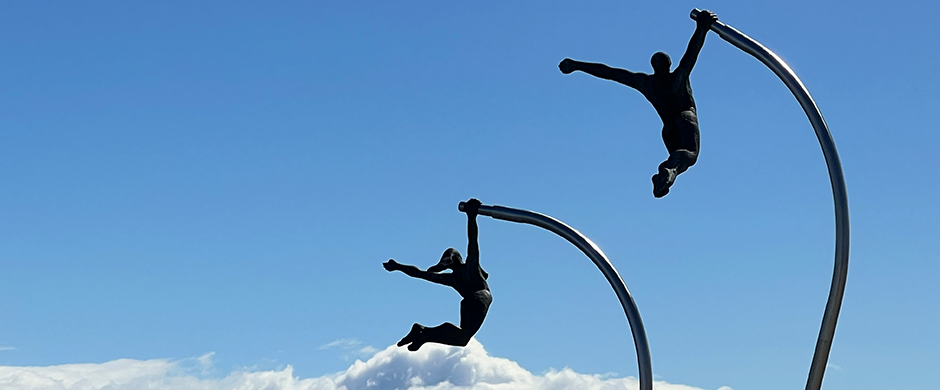
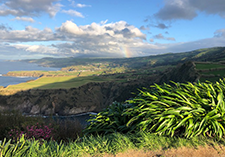
 The skies over the Azores Islands are crystal clear in mid September. We are visiting 3 of the 9 islands over 10 days with 5 couples who traveled together 2 years before. The Azores archipelago is 1000 miles east of the coast of Portugal and the newest geological addition to the planet. Volcanoes still erupt (as recently as 1957). We arrive on Sao Miguel, the largest island on a 4 hour flight from Boston. The plane arrives at 6am local time. Had enough numbers?
 Our first day, we have to wait for our rooms as the hotels are busy. But their restaurant
makes extra room for us. After lots of coffee, we head right off to explore starting at the
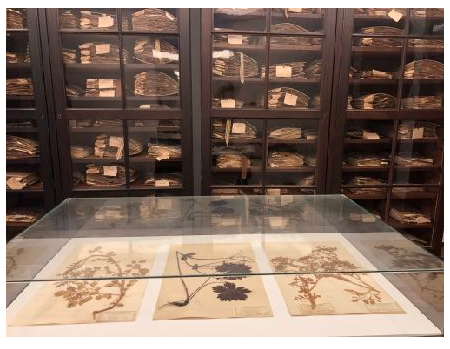
natural history museum. A naturalist, Carlos Machado, avidly collected specimens of the unique plant and sea life. It is a massive collection. The visuals are strong enough to
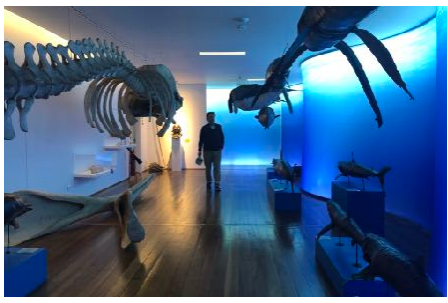
keep our fading attention. We see the distinctive Azorean amalgamation of zoology, botanical specimens and mineralogy. Later, an entire wing was added for sacred art, regional ethnography, painting, tile art, sculpture, gold and silver work and old toys.
(If I was doing this again, it would be best to drop in here at the end of a trip to absorb
the experience about all that these islands have to offer – when I was awake!)
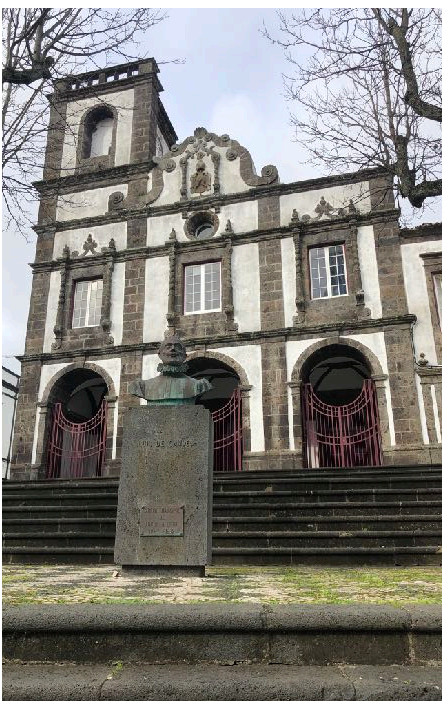 For centuries, the Azores were a safe and crucial sanctuary for sailors – that is for the
ones able to find them. Each island has different shorelines: white sand and black sand beaches, shallow inlets, steep mountain cliffs and natural ports nestled in volcanic craters. Captains would tuck their rigs into these harbors to refuel, revitalize their crews and restart their explorations. The waters between the 9 islands are very deep with strong currents attracting whales of all kinds. Whalewatching has replaced the hunt that was a thriving, dangerous industry, particularly lucrative from Pico Island. The Portuguese were intrepid sailors and boat men who had no fear in high seas to strike a leviathan with an 8 foot harpoon in a 36 foot skiff miles from the coast.
After a good night sleep, the walk through the cobblestones streets of Punta Delgada is most enjoyable.
And we need not bother to check directions thanks to our pre-arranged guide who is an
energetic young Azorean proud to show us the features of Sao Miguel Island.“Tiago” will be with us for the next days, sharing his genuine hospitality, recounting the history he has carefully prepared. He points out distinctive tile patterns that mark each street that should help us know where we are.
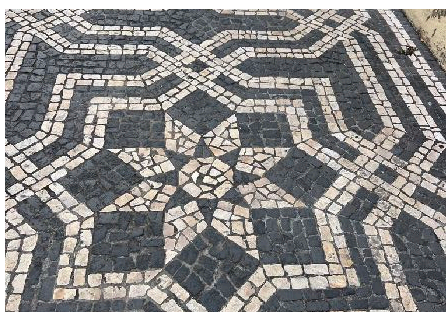 We weave through sidewalks crowded with locals finding shops and getting their days
activities. The white plaster buildings are ubiquitous, adorned with black carved basalt that adds a Portuguese flourish and continuity to the city land- scape. The air is fresh, salty, and breezy from the port.
This city stay is one walk-about after another, just as beautiful after dark!
Popular recommended restaurant that features local dishes is so popular the waiting line of locals stretches down the street. A nearby “tapas bar” has outside seating and cheerful wait staff assuring us there is plenty of room. A young attentive wait staff adapt quickly to us, a group in search of a “first meal”, a travel scenario that must be pretty frequent here. We order all sorts of plates to share. It is a first evening of smiles.
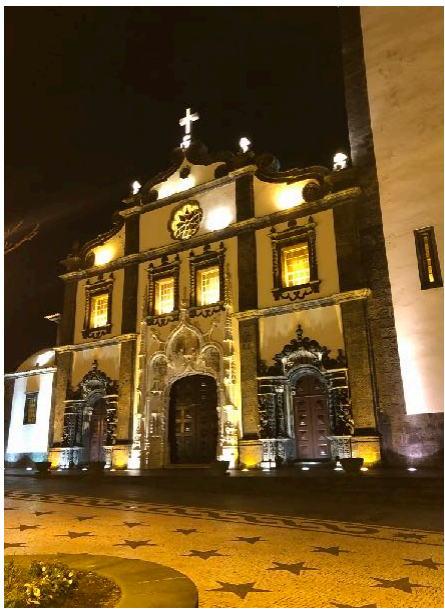 San Sebastian Cathedral is an early stop. It rises like a centerpiece on a fancy cake” is an example of “16th century Manueline architecture” constructed as the community of Punta Delgada was settled in 1432. The coat of arms of the Portuguese king is embedded high on the gold leaf ornately carved altar, a massive frontispiece that looks like carved stone, but is wood only. We learn of the expansion in the 18th century that created the cathedral and striking clock tower. We learn most of the gold that was shipped from Brazil to be paid to England stopped here, but then kept going to its destination. Gold was not used in these churches. The wood is unadorned!
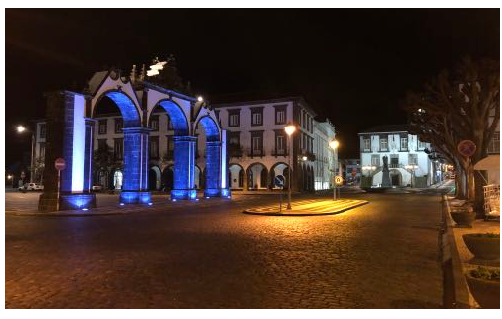 An expansive plaza features the 3 arches of the City Gates, moved to this inland square
when the port was fortified. The patterns of the cobblestones here are like a tapestry of stripes, stars, waves, circles and flowers. At one time, the Gates were at the edge of the harbor waters. Ship captains moored their brigs in the harbor and sent skiffs filled with
goods to sell and trade and replenish with new cargo. The waters edge is now filled
in, cemented into a long esplanade. It is a strong, immobile wall. This is primarily for
fishing and commercial boats here, and a few vessels for tourism. We see whale watching boats, dinner cruise ships and private small motorized run abouts. Thecruising yachts and pleasure boats tie up at Faial island, where we will be in a couple of days.
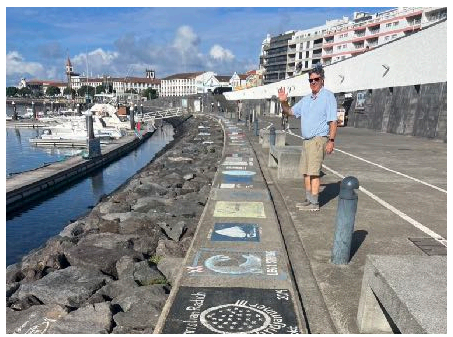 The esplanade along the waterfront is brightened by a colorful display of “flags” hand painted in squares, each designed by ship’s crew. The walkway tells the story of every boat: their colors, their port of call, the names of the sailors and the year they were here. Some are weathered almost faded away. Others are bright and new. The port is chock full of boats along acres of piers that stretch from the man made border to thesea.
At one end is the 16th-century Fort of São Brás, a massive military construction, in the shape of a star which provided wrap around views for defense. Further protection came from a deep moat around the base, now dry.
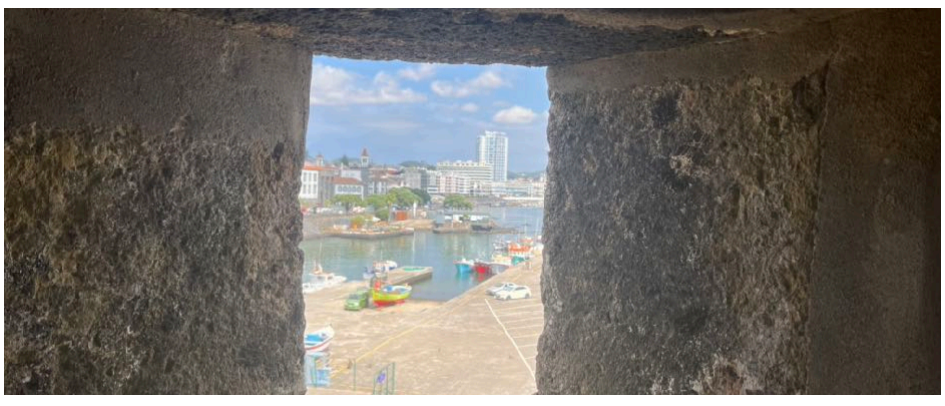
The fort houses galleries with changing exhibits. What I found interesting was just to walk through the unique structure and up a wide long staircase to the view of the city from the top. But locals suggest this monument be a second choice if you have only a short amount of time here.
Until the Portuguese explorers arrived, the Azores Islands are thought to have been uninhabited. There is/was not an indigenous culture. Thin evidence of Viking relics have
been found. Yes, old charts are uncovered. But navigation was i its infancy and the islands were difficult to find. We learn all sorts of snippets from Tiago’s stories. (His accent can be excellent and his huge understanding of English comes from watching movies, he says). His historic perspective is new to me. He talks of “eras”. I keep my ears open. The Templar order, an order of French Christian knights founded in 1100 was banned from here or does he mean to here? Oh, how did they get here? Who banned them?
There is a second expansive plaza, 5 de Octobre Square, filled with lime trees that are severely pruned every season, and more ornate black basalt and white marble cobblestone patterns. Our guide takes us into the church of his family. Tiago’s is smiling with pride describing this association and friendship.
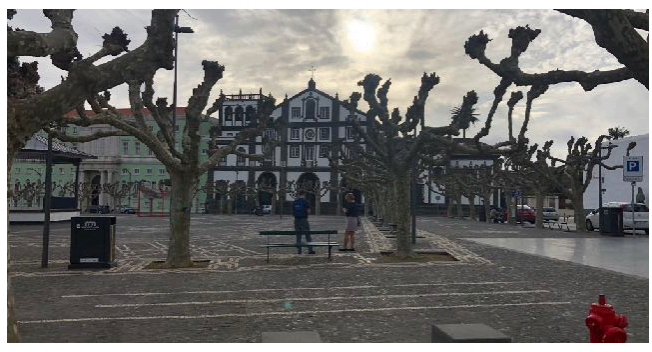
Next door is the Convent of Nossa Senhora da Esperanca chapel home to a revered statue of Christ of the Miracles. Its copa or vestment is regularly replaced, stored and basically re-enshrined. The sculpture is behind an iron grill. The nuns will open this to visitors at a certain time of day. The chapel is adjacent to the colossal convent of Nossa Senhora da Esperanca where nuns in the order of St. Francis are still in residence. They hold an annual Festival of Miracles when the chapel is adorned with lights. Tiago finds this all very moving and invites us to return at 5 pm if we want to see the statue. We will pass this time, but thank him very much.
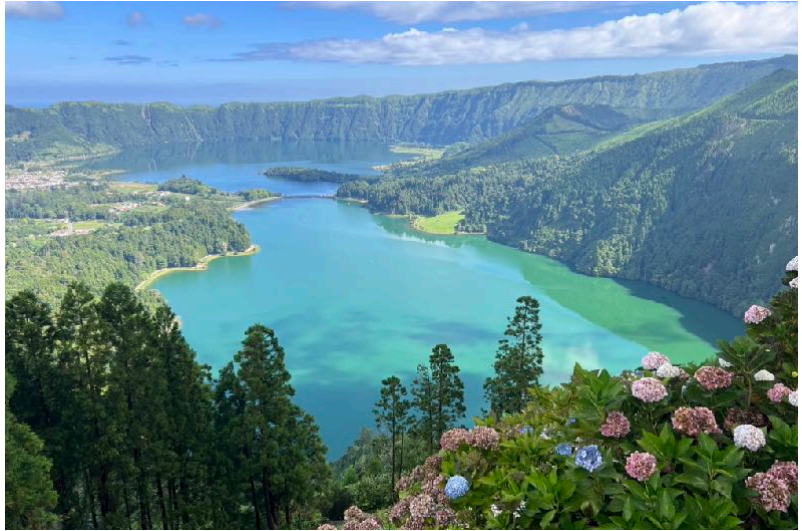
Tomorrow, we will explore the countryside. Siete Cidades is the volcanic lake on the
western edge of the island. Our bags will be packed and we will be headed to our next
hotel, the Terra Nostra Garden Hotel in Furnas.
 Food finds: After a day of touring, it helps to know where you are going! Make a reservation in advance! Or consider a quick option:
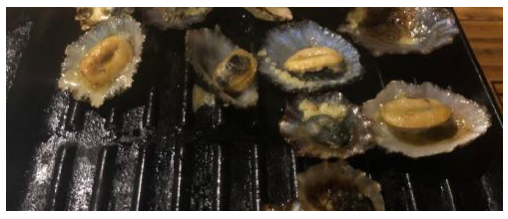
When it’s time for a tapas bar, in Spain, the tapas are small individual portions. The Azorean restaurants serve generous plates of a single food to share: large plates of green salad, an arrangement of local cheeses, and plates of linets, the local clam. Linets are scary looking. They have a dark shell, sometimes mossy. When the clams are roasted in garlic and oil, they scoop from the shell easily. Can’t go wrong, right? A beer known as “Special” is in a small bottle, about 6 oz. brewed here. And there is a passion fruit soda that goes down well. Also gin is crafted here in several flavors and available. The choices are beer, wine red or a local white from Pico and gin! Everyone is happy.
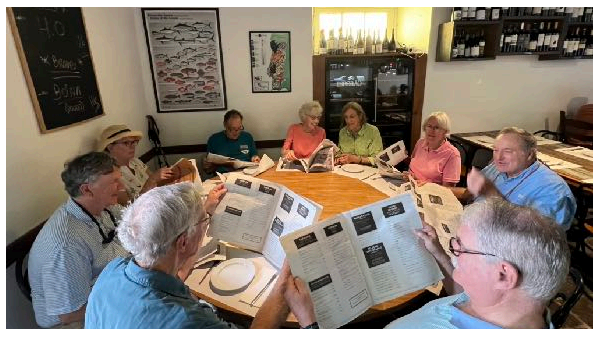
Tip for groups: consider eating in smaller groups. Rearrange the dinner seating plan each time, but sit by family members who you want to share food. Order one entree for two people. You can always ask for more! Make reservations for dinners the week before you leave home through your travel agent or on your own – even if it is the restaurant in your hotel!
Your thoughts? Be in touch! Want to go? Let me know!
Happy Trails!
 Follow us